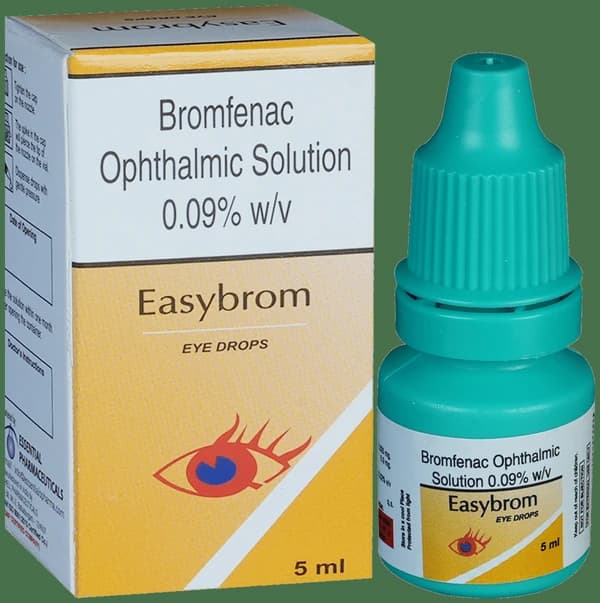
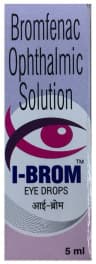
Ibrom Eye Drop
Images are for reference. Actual packaging may vary.
Packet of 5 ml • Liquid
Ibrom Eye Drop
Bromfenac (0.09% w/v)
₹101.25
Packet of 5 ml • Liquid
1
Delivery
Safe & Secure
Easy Returns
24/7 Support
SMARTER CARE
A little guidance.
A better choice.
Haven’t found an alternative? A health advisor can help you understand what to do next.
No matching alternative found
We haven't found a cheaper matching alternative in our catalogue right now. Our health advisors can help you explore other options.
Active composition
Bromfenac
How It Works
Bromfenac inhibits cyclooxygenase (COX) enzymes, reducing the synthesis of prostaglandins involved in inflammation.
Uses & Benefits
Medical applications
PainAnti-inflammatoryInflammation
Ibrom Eye Drop contains Bromfenac 0.09% w/v, a nonsteroidal anti-inflammatory drug (NSAID) specifically formulated for ophthalmic use. Bromfenac acts by inhibiting cyclooxygenase enzymes (COX-1 and COX-2), thereby reducing the synthesis of prostaglandins responsible for inflammation, pain, and edema in ocular tissues. Ibrom Eye Drop is primarily indicated for the treatment of postoperative inflammation and prevention of ocular pain following cataract surgery.
Read full descriptionShow less
It is also utilized in managing other inflammatory conditions of the eye where NSAID therapy is appropriate. The formulation ensures rapid penetration into ocular tissues, providing effective anti-inflammatory and analgesic effects with minimal systemic absorption. Ibrom Eye Drop should be administered as directed by a healthcare professional, typically one drop into the affected eye(s) twice daily, starting 24 hours before surgery and continuing for up to two weeks postoperatively.
Caution is advised in patients with known hypersensitivity to bromfenac or other NSAIDs. Use with care in individuals with pre-existing ocular conditions such as dry eye or corneal epithelial defects. Common adverse effects may include transient burning or stinging upon instillation, blurred vision, or ocular irritation. Patients should avoid contact lens use during treatment unless otherwise advised by their physician.
Dosage & How to Use
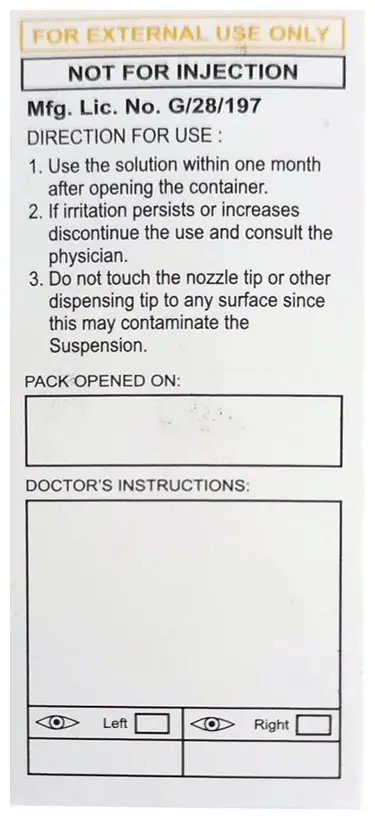
How to use Ibrom Eye Drop This medicine is for external use only. Use it in the dose and duration as advised by your doctor. Check the label for directions before use. Hold the dropper close to the eye without touching it. Gently squeeze the dropper and place the medicine inside the lower eyelid. Wipe off the extra liquid.
Safety Advice
Important precautions
Side effects
Side-effect information is not available for this medicine. Please consult your doctor or pharmacist.
Safety Advice
Alcohol
No interaction found/established
High Risk
Pregnancy
Ibrom Eye Drop may be unsafe to use during pregnancy. Although there are limited studies in humans, animal studies have shown harmful effects on the developing baby. Your doctor will weigh the benefits and any potential risks before prescribing it to you. Please consult your doctor.
Medical Advice
Driving
Ibrom Eye Drop may cause blurring of your vision for a short time just after its use. Do not drive until your vision is clear.
Exercise Caution
Liver
No interaction found/established
Regular Checkup
Breastfeeding
Ibrom Eye Drop is probably safe to use during breastfeeding. Limited human data suggests that the drug does not represent any significant risk to the baby.
Consult Doctor
Kidney
No interaction found/established
Regular Checkup
Customer Reviews
0 reviews for Ibrom Eye Drop