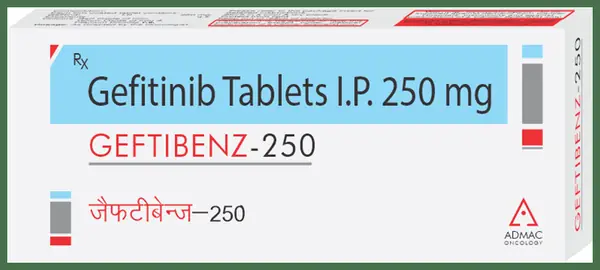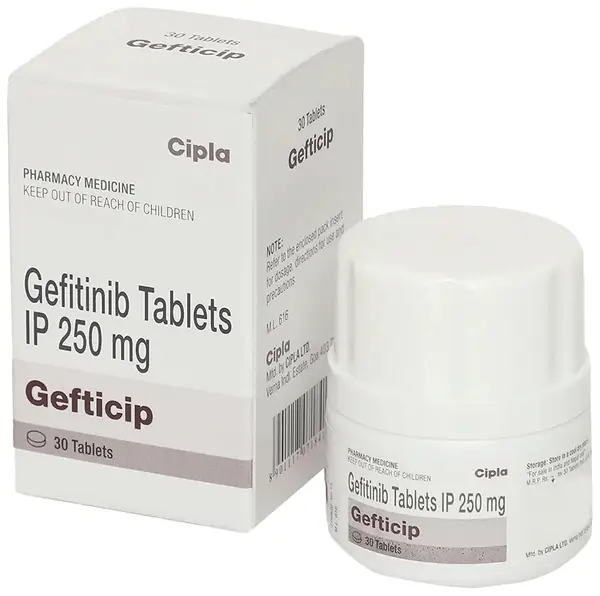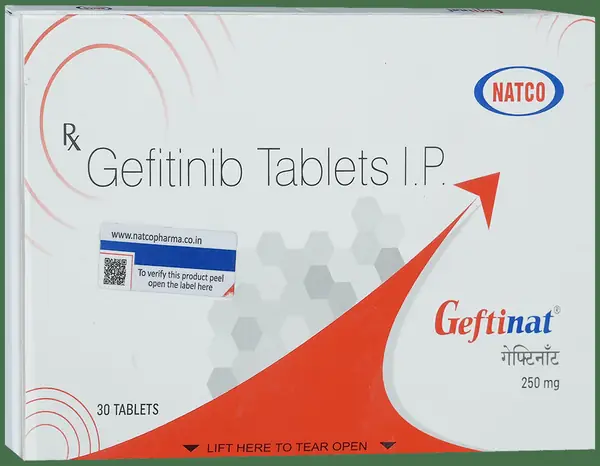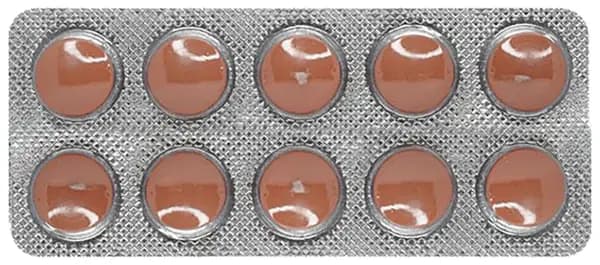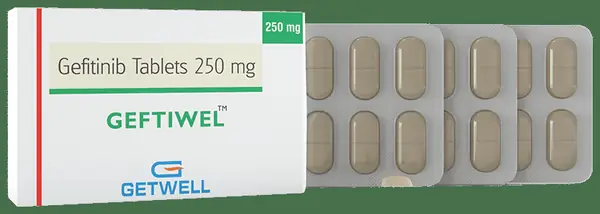

Geftib Tablet
Click to enlarge
Images are for reference. Actual packaging may vary.
Strip of 30 tablets • TabletPrescription requiredSchedule H
Geftib Tablet
Gefitinib (250mg)
₹4838.00
Strip of 30 tablets • Tablet
A valid prescription is required for this medicine.
1
Delivery
Safe & Secure
Easy Returns
24/7 Support
SMARTER CARE
A little guidance.
A better choice.
Haven’t found an alternative? A health advisor can help you understand what to do next.
No matching alternative found
We haven't found a cheaper matching alternative in our catalogue right now. Our health advisors can help you explore other options.
Active composition
Gefitinib 250 mg
How It Works
Gefitinib selectively inhibits EGFR tyrosine kinase, blocking downstream signaling pathways involved in cancer cell proliferation and survival.
Medicine Strength
250 mg
Uses & Benefits
Medical applications
NauseaSkin
Geftib Tablet contains Gefitinib 250 mg, a selective epidermal growth factor receptor (EGFR) tyrosine kinase inhibitor used primarily in the treatment of non-small cell lung cancer (NSCLC). Gefitinib acts by blocking the intracellular phosphorylation of tyrosine kinase associated with the EGFR, thereby inhibiting tumor cell proliferation and inducing apoptosis in cancer cells expressing mutant EGFR.
Read full descriptionShow less
It is indicated for patients with locally advanced or metastatic NSCLC harboring specific EGFR mutations. The tablet is administered orally, with dosage and duration determined by the treating physician based on clinical response and tolerability. Common adverse effects include rash, diarrhea, nausea, and elevated liver enzymes, which should be monitored regularly. Patients should be advised to report any signs of interstitial lung disease, hepatotoxicity, or severe skin reactions promptly.
Geftib Tablet should be used cautiously in patients with pre-existing liver impairment or pulmonary conditions. Drug interactions may occur with agents affecting cytochrome P450 enzymes, necessitating careful review of concomitant medications. Overall, Gefitinib provides a targeted therapeutic option in EGFR-mutated NSCLC, improving progression-free survival and quality of life when used as part of a comprehensive oncologic treatment plan.
Dosage & How to Use
How to use Geftib Tablet Take this medicine in the dose and duration as advised by your doctor. Swallow it as a whole. Do not chew, crush or break it. Geftib Tablet may be taken with or without food, but it is better to take it at a fixed time.
Safety Advice
Important precautions
Side effects
Side-effect information is not available for this medicine. Please consult your doctor or pharmacist.
Safety Advice
Alcohol
It is unsafe to consume alcohol with Geftib Tablet.
High Risk
Pregnancy
Geftib Tablet is unsafe to use during pregnancy as there is definite evidence of risk to the developing baby. However, the doctor may rarely prescribe it in some life-threatening situations if the benefits are more than the potential risks. Please consult your doctor.
Medical Advice
Driving
Geftib Tablet may cause side effects which could affect your ability to drive.
Exercise Caution
Liver
Geftib Tablet is probably safe to use in patients with liver disease. Limited data available suggests that dose adjustment of Geftib Tablet may not be needed in these patients. Please consult your doctor.
Regular Checkup
Breastfeeding
Geftib Tablet is probably unsafe to use during breastfeeding. Limited human data suggests that the drug may pass into the breastmilk and harm the baby.
Consult Doctor
Kidney
Geftib Tablet should be used with caution in patients with severe kidney disease. Dose adjustment of Geftib Tablet may be needed. Please consult your doctor.
Regular Checkup
Customer Reviews
0 reviews for Geftib Tablet