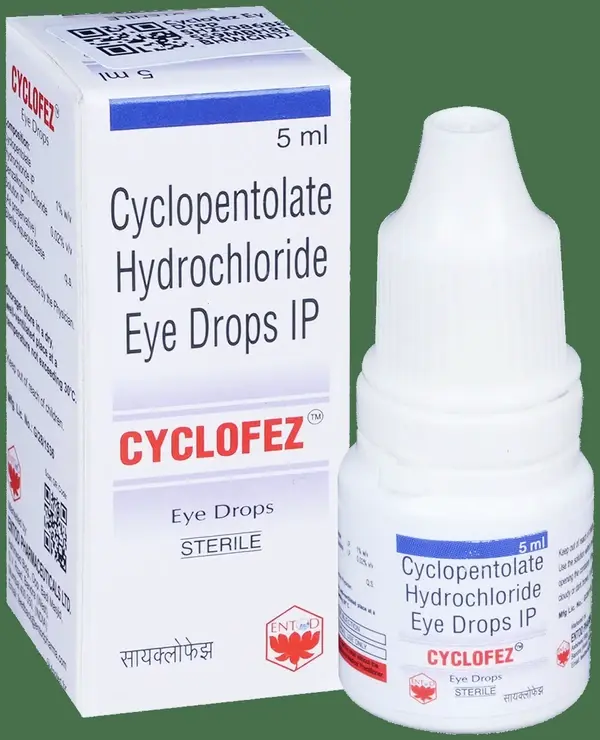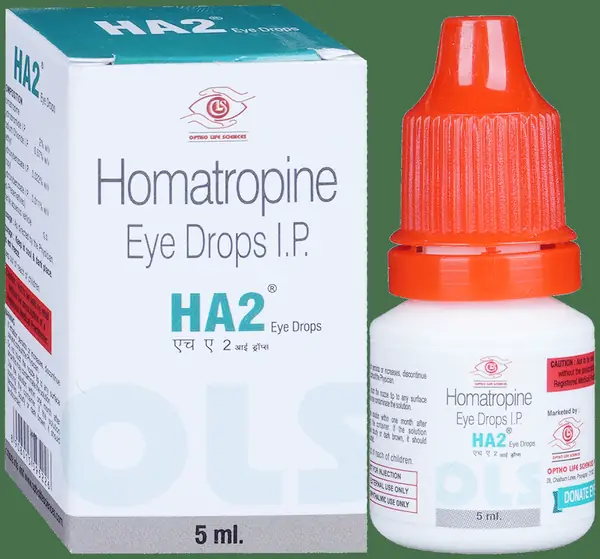

Eslate Eye Drops
Images are for reference. Actual packaging may vary.
Bottle of 5 ml • Syrup
Eslate Eye Drops
Cyclopentolate (1% w/v)
₹100.00
Bottle of 5 ml • Syrup
1
Delivery
Safe & Secure
Easy Returns
24/7 Support
SMARTER CARE
A little guidance.
A better choice.
Haven’t found an alternative? A health advisor can help you understand what to do next.
No matching alternative found
We haven't found a cheaper matching alternative in our catalogue right now. Our health advisors can help you explore other options.
Active composition
Cyclopentolate
How It Works
Cyclopentolate blocks muscarinic receptors in the eye, causing pupil dilation and paralysis of accommodation.
Uses & Benefits
Medical applications
Flu
Eslate Eye Drops contain Cyclopentolate 1% w/v, a parasympatholytic agent used primarily for diagnostic purposes in ophthalmology. Cyclopentolate acts by temporarily paralyzing the ciliary muscle of the eye, resulting in cycloplegia and mydriasis. This facilitates accurate measurement of refractive errors by preventing accommodation and allows thorough examination of the retina and other internal ocular structures.
Read full descriptionShow less
Eslate Eye Drops are indicated for use in pediatric and adult patients requiring cycloplegic refraction or fundus examination. The onset of action typically occurs within 30 to 60 minutes after instillation, with effects lasting up to 24 hours. The medication should be administered as directed by a healthcare professional, usually one or two drops instilled into the conjunctival sac.
Patients should be advised to avoid activities requiring clear vision, such as driving or operating machinery, until the effects wear off. Common adverse reactions may include transient stinging upon instillation, blurred vision, photophobia, and in rare cases, systemic anticholinergic effects such as dry mouth or flushing. Use with caution in patients with narrow-angle glaucoma or known hypersensitivity to cyclopentolate.
Eslate Eye Drops should be stored in a cool, dry place away from direct light.
Dosage & How to Use
How to use Eslate Ophthalmic Solution This medicine is for external use only. Take it in the dose and duration as advised by your doctor. Check the label for directions before use. Hold the dropper close to the eye without touching it. Gently squeeze the dropper and place the medicine inside the lower eyelid. Wipe off extra liquid.
Safety Advice
Important precautions
Side effects
Side-effect information is not available for this medicine. Please consult your doctor or pharmacist.
Safety Advice
Alcohol
No interaction found/established
High Risk
Pregnancy
Eslate Eye Drops may be unsafe to use during pregnancy. Although there are limited studies in humans, animal studies have shown harmful effects on the developing baby. Your doctor will weigh the benefits and any potential risks before prescribing it to you. Please consult your doctor.
Medical Advice
Driving
Eslate Eye Drops may cause blurring of your vision for a short time just after its use. Do not drive until your vision is clear.
Exercise Caution
Liver
No interaction found/established
Regular Checkup
Breastfeeding
Eslate Eye Drops is probably safe to use during breastfeeding. Limited human data suggests that the drug does not represent any significant risk to the baby. To reduce the amount of Eslate Eye Drops that reaches the breastmilk, place pressure over the corner of the eye for 1 minute or more, then remove the excess solution with an absorbent tissue.
Consult Doctor
Kidney
No interaction found/established
Regular Checkup
Customer Reviews
0 reviews for Eslate Eye Drops