Ocuflur Eye Drop
Images are for reference. Actual packaging may vary.
Bottle of 5 ml • Syrup
Ocuflur Eye Drop
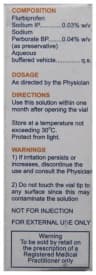
Flurbiprofen (0.03% w/v)
₹76.55
Bottle of 5 ml • Syrup
1
Delivery
Safe & Secure
Easy Returns
24/7 Support
SMARTER CARE
A little guidance.
A better choice.
Haven’t found an alternative? A health advisor can help you understand what to do next.
No matching alternative found
We haven't found a cheaper matching alternative in our catalogue right now. Our health advisors can help you explore other options.
Active composition
Flurbiprofen
How It Works
Flurbiprofen inhibits cyclooxygenase (COX) enzymes, reducing the synthesis of prostaglandins, which mediate pain and inflammation.
Uses & Benefits
Medical applications
PainAnti-inflammatoryInflammationAllergic
Ocuflur Eye Drop contains Flurbiprofen 0.03% w/v, a nonsteroidal anti-inflammatory drug (NSAID) indicated for ophthalmic use. It is primarily utilized to reduce inflammation and pain associated with ocular surgery, such as cataract extraction and intraocular lens implantation. Flurbiprofen acts by inhibiting cyclooxygenase enzymes, thereby decreasing the synthesis of prostaglandins, which are mediators of inflammation and pain.
Read full descriptionShow less
Ocuflur Eye Drop is also employed to prevent miosis during intraocular surgery, maintaining pupil dilation to facilitate surgical procedures. The formulation is intended for topical administration to the eye, ensuring localized therapeutic effects with minimal systemic absorption. It is contraindicated in patients with hypersensitivity to Flurbiprofen or other NSAIDs. Caution is advised in individuals with a history of asthma or allergic reactions to NSAIDs.
Adverse effects may include transient burning or stinging upon instillation, ocular irritation, or hypersensitivity reactions. Prolonged use should be avoided to reduce the risk of corneal complications. Ocuflur Eye Drop should be used under the supervision of an ophthalmologist, adhering to prescribed dosage and duration to optimize safety and efficacy. Storage should be at controlled room temperature, protected from light and contamination.
Dosage & How to Use
How to use Ocuflur Eye Drop This medicine is for external use only. Use it in the dose and duration as advised by your doctor. Check the label for directions before use. Hold the dropper close to the eye without touching it. Gently squeeze the dropper and place the medicine inside the lower eyelid. Wipe off the extra liquid.
Safety Advice
Important precautions
Side effects
Side-effect information is not available for this medicine. Please consult your doctor or pharmacist.
Safety Advice
Alcohol
No interaction found/established
High Risk
Pregnancy
Ocuflur Eye Drop may be unsafe to use during pregnancy. Although there are limited studies in humans, animal studies have shown harmful effects on the developing baby. Your doctor will weigh the benefits and any potential risks before prescribing it to you. Please consult your doctor.
Medical Advice
Driving
Ocuflur Eye Drop may cause side effects which could affect your ability to drive. Undesirable effects such as dizziness, drowsiness, fatigue and visual disturbances are possible after taking Ocuflur Eye Drop. This may affect your driving ability.
Exercise Caution
Liver
No interaction found/established
Regular Checkup
Breastfeeding
Ocuflur Eye Drop is safe to use during breastfeeding. Human studies suggest that the drug does not pass into the breastmilk in a significant amount and is not harmful to the baby.
Consult Doctor
Kidney
No interaction found/established
Regular Checkup
Customer Reviews
0 reviews for Ocuflur Eye Drop