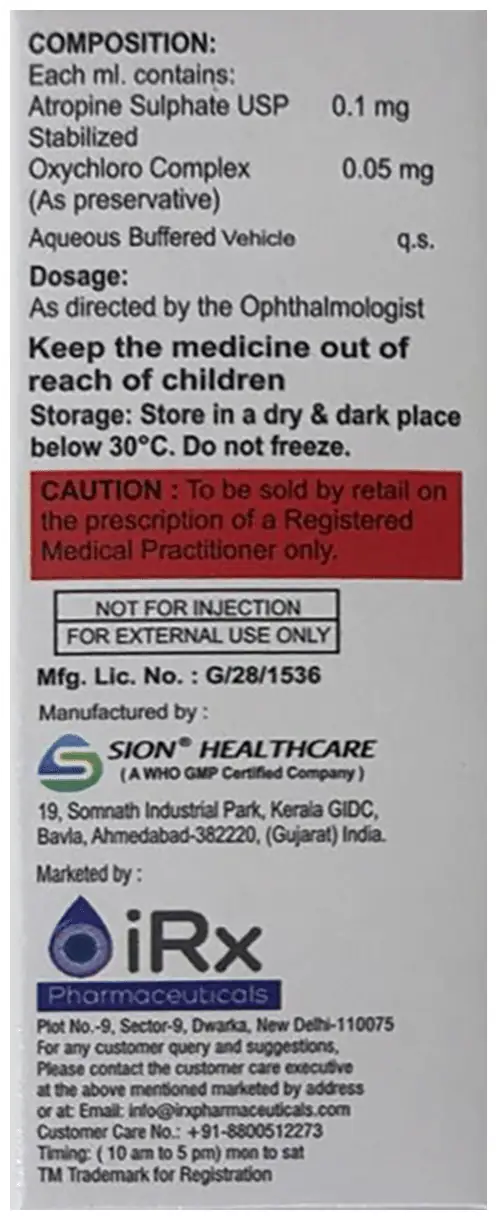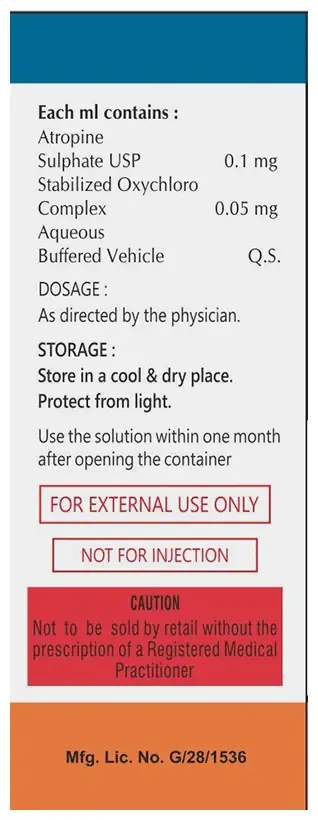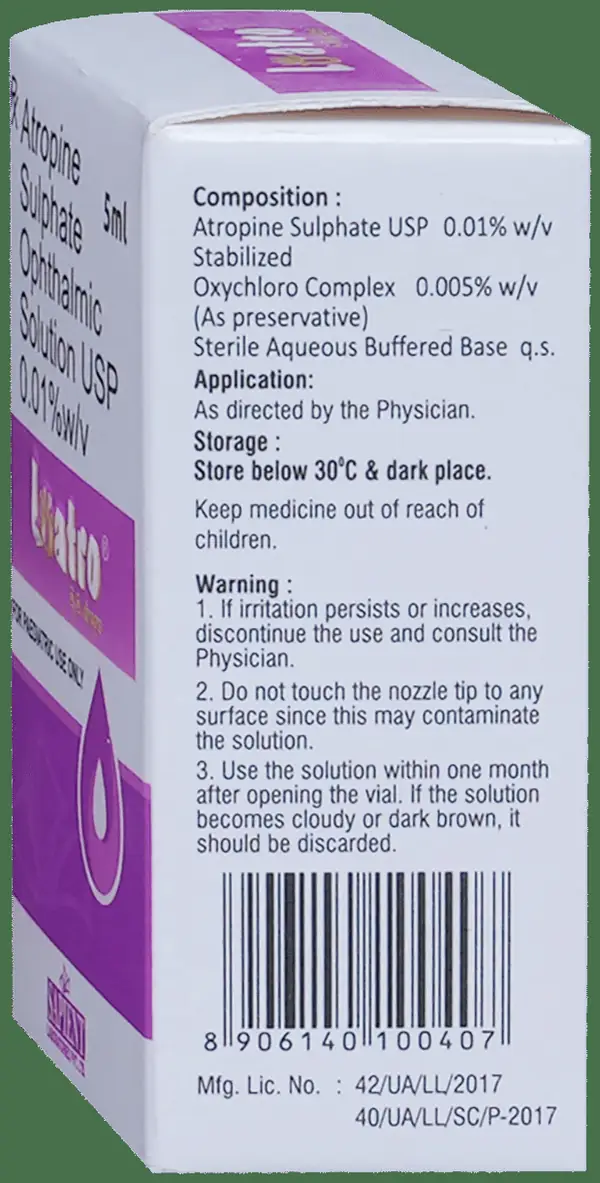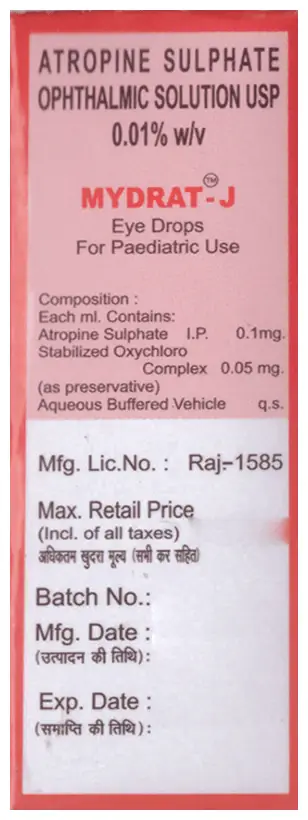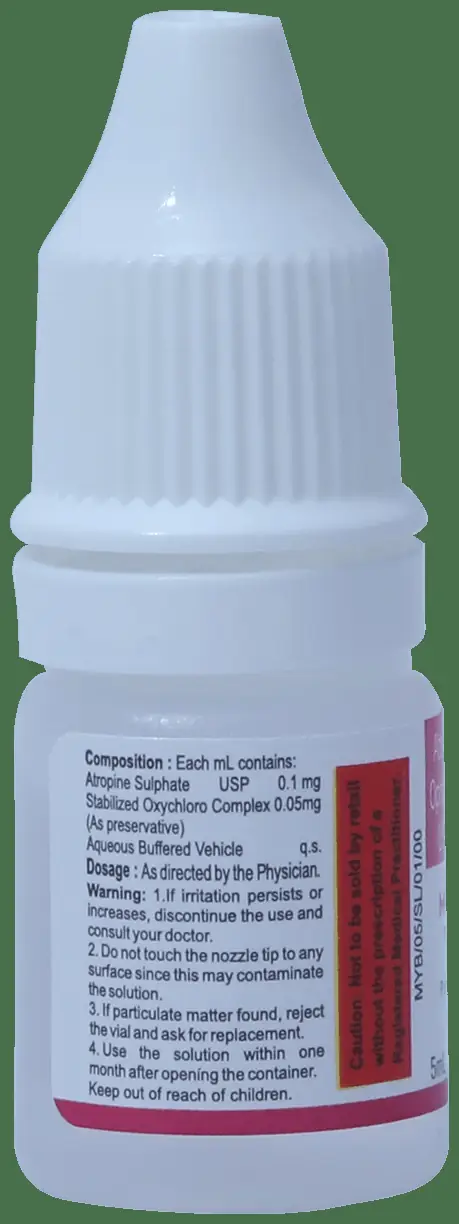
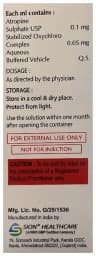
Kidvid Eye Drop
Images are for reference. Actual packaging may vary.
Bottle of 5 ml • Syrup
Kidvid Eye Drop
Atropine (0.01% w/v)
₹196.80
Bottle of 5 ml • Syrup
1
Delivery
Safe & Secure
Easy Returns
24/7 Support
SMARTER CARE
A little guidance.
A better choice.
Haven’t found an alternative? A health advisor can help you understand what to do next.
No matching alternative found
We haven't found a cheaper matching alternative in our catalogue right now. Our health advisors can help you explore other options.
Active composition
Atropine
How It Works
Atropine blocks muscarinic acetylcholine receptors, leading to increased heart rate and reduced secretions by inhibiting parasympathetic nervous system activity.
Uses & Benefits
Medical applications
Kidvid Eye Drop contains Atropine 0.01% w/v, a parasympatholytic agent primarily used in ophthalmology to induce mydriasis and cycloplegia. Atropine acts by competitively blocking muscarinic receptors in the iris sphincter and ciliary muscles, resulting in pupil dilation and paralysis of accommodation. This low concentration formulation is typically employed in pediatric patients to manage conditions such as amblyopia, accommodative esotropia, and to facilitate comprehensive ocular examinations by preventing accommodation.
Read full descriptionShow less
Kidvid Eye Drop is administered topically, with dosage and frequency determined by the treating ophthalmologist based on the clinical indication and patient response. The onset of action generally occurs within 30 to 40 minutes, with effects lasting up to 7 to 14 days due to the prolonged receptor blockade. Caution is advised in patients with a history of hypersensitivity to atropine or other anticholinergic agents, and it should be used cautiously in individuals with narrow-angle glaucoma due to the risk of precipitating angle closure.
Common adverse effects include transient photophobia, blurred vision, and local irritation. Proper administration technique and adherence to prescribed dosing are essential to minimize systemic absorption and potential side effects. Kidvid Eye Drop should be stored at controlled room temperature, protected from light, and kept out of reach of children.
Dosage & How to Use
How to use Kidvid Eye Drop This medicine is for external use only. Use it in the dose and duration as advised by your doctor. Check the label for directions before use. Hold the dropper close to the eye without touching it. Gently squeeze the dropper and place the medicine inside the lower eyelid. Wipe off the extra liquid.
Safety Advice
Important precautions
Side effects
Side-effect information is not available for this medicine. Please consult your doctor or pharmacist.
Safety Advice
Alcohol
No interaction found/established
High Risk
Pregnancy
Information regarding the use of Kidvid Eye Drop during pregnancy is not available. Please consult your doctor.
Medical Advice
Driving
Kidvid Eye Drop may decrease alertness, affect your vision or make you feel sleepy and dizzy. Do not drive if these symptoms occur.
Exercise Caution
Liver
No interaction found/established
Regular Checkup
Breastfeeding
Information regarding the use of Kidvid Eye Drop during breastfeeding is not available. Please consult your doctor. Milk secretion may decrease.
Consult Doctor
Kidney
No interaction found/established
Regular Checkup
Customer Reviews
0 reviews for Kidvid Eye Drop