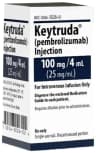
Keytruda Injection
Images are for reference. Actual packaging may vary.
Vial of 4 ml • LiquidPrescription requiredSchedule H
Keytruda Injection
Pembrolizumab (100mg)
₹216500.00
Vial of 4 ml • Liquid
A valid prescription is required for this medicine.
1
Delivery
Safe & Secure
Easy Returns
24/7 Support
SMARTER CARE
A little guidance.
A better choice.
Haven’t found an alternative? A health advisor can help you understand what to do next.
No matching alternative found
We haven't found a cheaper matching alternative in our catalogue right now. Our health advisors can help you explore other options.
Active composition
Pembrolizumab 100 mg
How It Works
Pembrolizumab blocks the PD-1 receptor on T-cells, preventing its interaction with PD-L1 and PD-L2, thereby enhancing anti-tumor immunity.
Medicine Strength
100 mg
Uses & Benefits
Medical applications
Keytruda Injection, containing Pembrolizumab 100mg, is a humanized monoclonal antibody used as an immune checkpoint inhibitor in oncology. It specifically targets the programmed death-1 (PD-1) receptor on T-cells, blocking its interaction with PD-L1 and PD-L2 ligands, thereby enhancing the immune system's ability to detect and destroy cancer cells. Keytruda is indicated for the treatment of various malignancies, including but not limited to, unresectable or metastatic melanoma, non-small cell lung cancer (NSCLC), head and neck squamous cell carcinoma (HNSCC), classical Hodgkin lymphoma, urothelial carcinoma, and microsatellite instability-high (MSI-H) or mismatch repair deficient (dMMR) cancers.
Read full descriptionShow less
Administered via intravenous infusion, the dosing regimen varies according to the specific cancer type and patient condition. Keytruda has demonstrated efficacy in improving overall survival and progression-free survival in multiple clinical trials. Common adverse effects include fatigue, rash, pruritus, diarrhea, and immune-mediated reactions such as pneumonitis, colitis, hepatitis, endocrinopathies, and nephritis, necessitating close monitoring and prompt management.
Keytruda should be used under specialist supervision with appropriate patient selection and regular assessment to optimize therapeutic outcomes while minimizing potential risks.
Dosage & How to Use
Monoclonal antibody (mAb)
Safety Advice
Important precautions
Side effects
Side-effect information is not available for this medicine. Please consult your doctor or pharmacist.
Safety Advice
Alcohol
Keytruda Injection may be unsafe to use during pregnancy. Although there are limited studies in humans, animal studies have shown harmful effects on the developing baby. Your doctor will weigh the benefits and any potential risks before prescribing it to you. Please consult your doctor.
High Risk
Pregnancy
Keytruda Injection is probably unsafe to use during breastfeeding. Limited human data suggests that the drug may pass into the breastmilk and harm the baby.
Medical Advice
Driving
Keytruda Injection should be used with caution in patients with kidney disease. Dose adjustment of Keytruda Injection may be needed. Please consult your doctor.
Exercise Caution
Breastfeeding
It is not known whether Keytruda Injection alters the ability to drive. Do not drive if you experience any symptoms that affect your ability to concentrate and react.
Consult Doctor
Kidney
Keytruda Injection should be used with caution in patients with liver disease. Dose adjustment of Keytruda Injection may be needed. Please consult your doctor.
Regular Checkup
Customer Reviews
0 reviews for Keytruda Injection