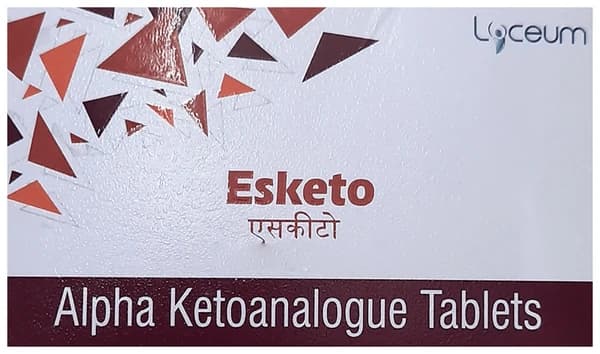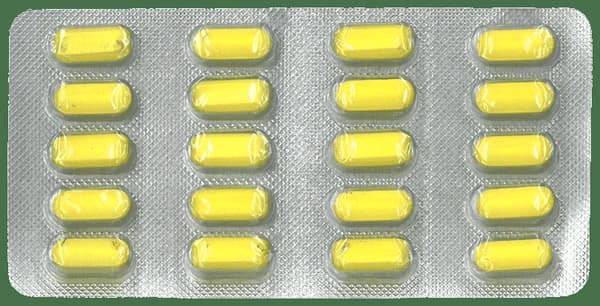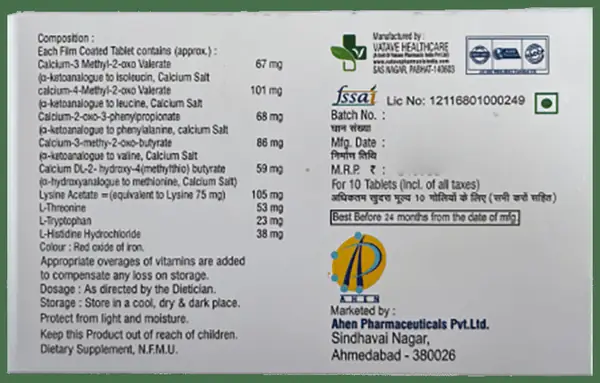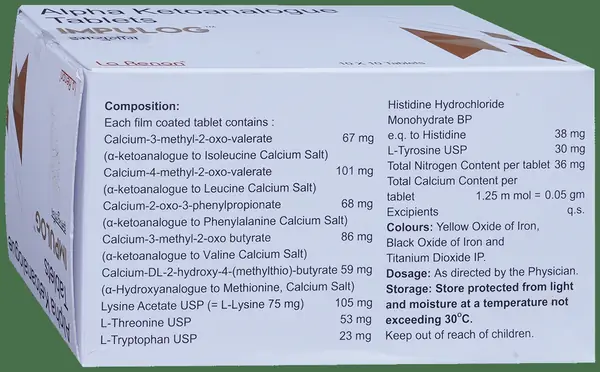

Ketogama Tablet
Images are for reference. Actual packaging may vary.
Strip of 10 tablets • TabletPrescription requiredSchedule H
Ketogama Tablet
Alpha Ketoanalogue (NA)
₹349.00
Strip of 10 tablets • Tablet
A valid prescription is required for this medicine.
1
Delivery
Safe & Secure
Easy Returns
24/7 Support
SMARTER CARE
A little guidance.
A better choice.
Haven’t found an alternative? A health advisor can help you understand what to do next.
No matching alternative found
We haven't found a cheaper matching alternative in our catalogue right now. Our health advisors can help you explore other options.
Active composition
Alpha Ketoanalogue
How It Works
Alpha Ketoanalogue provides a source of amino acids that helps reduce urea production and improves nitrogen balance in patients with kidney disease.
Uses & Benefits
Medical applications
Ketogama Tablet contains Alpha Ketoanalogue (NA), a critical adjunct in the management of chronic kidney disease (CKD). This medication serves as a precursor to essential amino acids, facilitating protein synthesis while minimizing nitrogenous waste accumulation, thereby reducing the metabolic burden on compromised renal function. Ketogama is primarily indicated for patients with CKD stages 3 to 5, particularly those on a low-protein diet, to delay the progression of renal impairment and mitigate uremic symptoms.
Read full descriptionShow less
The tablet aids in maintaining a balanced nitrogen metabolism, which is crucial in preventing malnutrition and muscle wasting commonly observed in advanced kidney disease. It is administered orally, with dosage tailored according to the severity of renal dysfunction and dietary protein intake. Ketogama is generally well tolerated; however, monitoring of serum electrolytes and renal parameters is recommended during therapy to detect potential imbalances or adverse effects.
Contraindications include hypersensitivity to any component of the formulation and severe hepatic impairment. Ketogama should be used under strict medical supervision, particularly in patients with concomitant metabolic disorders. Its integration into a comprehensive renal care plan, including dietary management and pharmacotherapy, optimizes patient outcomes by preserving residual renal function and improving quality of life.
Dosage & How to Use
How to use Ketogama Tablet Take this medicine in the dose and duration as advised by your doctor. Swallow it as a whole. Do not chew, crush or break it. Ketogama Tablet may be taken with or without food, but it is better to take it at a fixed time.
Safety Advice
Important precautions
Side effects
Side-effect information is not available for this medicine. Please consult your doctor or pharmacist.
Safety Advice
Alcohol
It is not known whether it is safe to consume alcohol with Ketogama Tablet. Please consult your doctor.
High Risk
Pregnancy
Information regarding the use of Ketogama Tablet during pregnancy is not available. Please consult your doctor.
Medical Advice
Driving
Ketogama Tablet may decrease alertness, affect your vision or make you feel sleepy and dizzy. Do not drive if these symptoms occur.
Exercise Caution
Liver
There is limited information available on the use of Ketogama Tablet in patients with liver disease. Please consult your doctor.
Regular Checkup
Breastfeeding
Information regarding the use of Ketogama Tablet during breastfeeding is not available. Please consult your doctor.
Consult Doctor
Kidney
Ketogama Tablet is probably safe to use in patients with kidney disease. Limited data available suggests that dose adjustment of Ketogama Tablet may not be needed in these patients. Please consult your doctor.
Regular Checkup
Customer Reviews
0 reviews for Ketogama Tablet