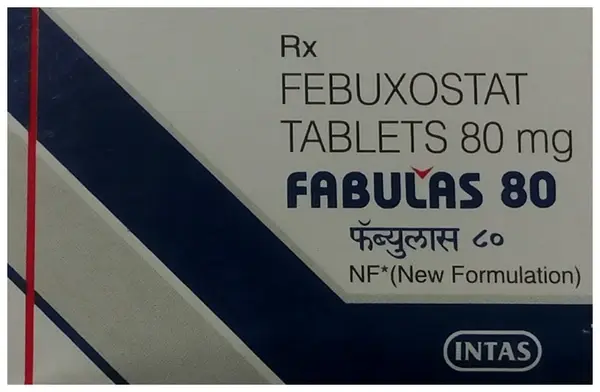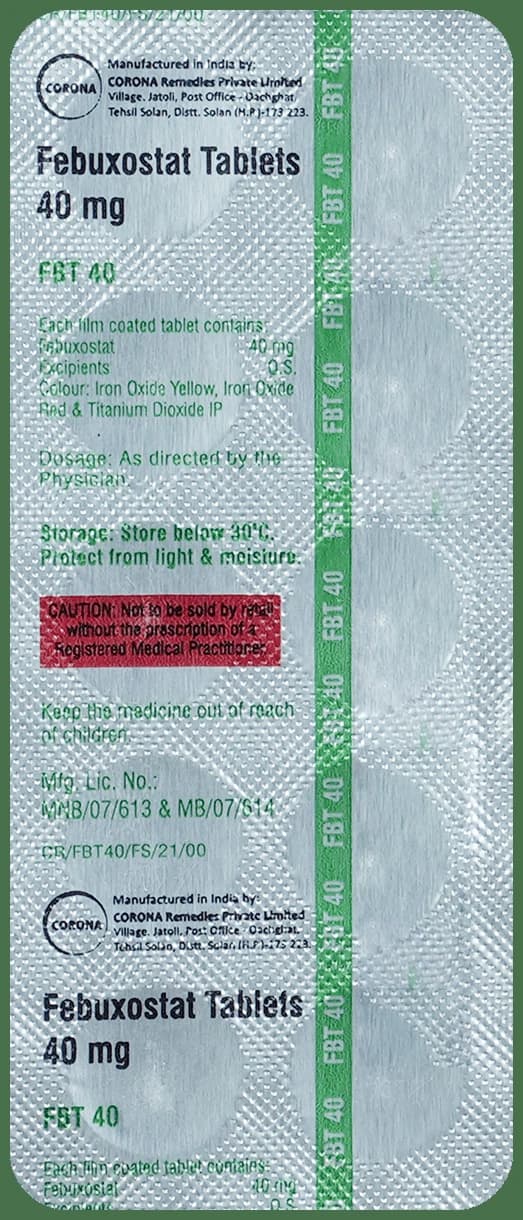

Febushine Tablet
Images are for reference. Actual packaging may vary.
Strip of 10 tablets • TabletPrescription requiredSchedule H
Febushine Tablet
Febuxostat (40mg)
₹161.00
Strip of 10 tablets • Tablet
A valid prescription is required for this medicine.
1
Delivery
Safe & Secure
Easy Returns
24/7 Support
SMARTER CARE
A little guidance.
A better choice.
Haven’t found an alternative? A health advisor can help you understand what to do next.
No matching alternative found
We haven't found a cheaper matching alternative in our catalogue right now. Our health advisors can help you explore other options.
Active composition
Febuxostat 40 mg
How It Works
Febuxostat inhibits the enzyme xanthine oxidase, thereby reducing the synthesis of uric acid in the body.
Medicine Strength
40 mg
Uses & Benefits
Medical applications
PainInflammationNausea
Febushine Tablet contains Febuxostat 40mg, a medication primarily used to manage hyperuricemia in patients with gout. Febuxostat is a xanthine oxidase inhibitor that works by reducing the production of uric acid in the body, thereby preventing gout attacks and complications associated with elevated uric acid levels such as joint pain, inflammation, and tophi formation. It is typically prescribed for individuals who have not responded well to other urate-lowering therapies like allopurinol or those who have contraindications to such treatments.
Read full descriptionShow less
Febushine is taken orally, usually once daily, with or without food, and the dosage may be adjusted based on serum uric acid levels and clinical response. Patients are advised to maintain adequate hydration and follow dietary recommendations to optimize treatment outcomes. Common side effects may include nausea, joint pain, rash, and liver enzyme abnormalities, so regular monitoring of liver function and uric acid levels is recommended during therapy.
Febushine should be used cautiously in patients with cardiovascular disease or liver impairment. It is important to inform healthcare providers of any other medications being taken to avoid potential drug interactions. Overall, Febushine Tablet is an effective option for long-term management of gout and hyperuricemia under medical supervision.
Dosage & How to Use
How to use Febushine Tablet Take this medicine in the dose and duration as advised by your doctor. Swallow it as a whole. Do not chew, crush or break it. Febushine Tablet may be taken with or without food, but it is better to take it at a fixed time.
Safety Advice
Important precautions
Side effects
Side-effect information is not available for this medicine. Please consult your doctor or pharmacist.
Safety Advice
Alcohol
Caution is advised when consuming alcohol with Febushine Tablet. Please consult your doctor.
High Risk
Pregnancy
Febushine Tablet may be unsafe to use during pregnancy. Although there are limited studies in humans, animal studies have shown harmful effects on the developing baby. Your doctor will weigh the benefits and any potential risks before prescribing it to you. Please consult your doctor.
Medical Advice
Driving
Febushine Tablet may cause side effects which could affect your ability to drive. Febushine Tablet may cause dizziness, sleepiness, blurred vision, numbness or tingling sensation. This may affect your driving ability.
Exercise Caution
Liver
Febushine Tablet should be used with caution in patients with severe liver disease. Dose adjustment of Febushine Tablet may be needed. Please consult your doctor. Limited information is available regarding the use of Febushine Tablet in these patients.
Regular Checkup
Breastfeeding
Febushine Tablet is probably unsafe to use during breastfeeding. Limited human data suggests that the drug may pass into the breastmilk and harm the baby.
Consult Doctor
Kidney
Febushine Tablet should be used with caution in patients with severe kidney disease. Dose adjustment of Febushine Tablet may be needed. Please consult your doctor. Limited information is available regarding the use of Febushine Tablet in these patients.
Regular Checkup
Customer Reviews
0 reviews for Febushine Tablet